This converts a PDF into an editable Word file. How well it works depends entirely on the source: a PDF exported from Word converts almost perfectly, while a scan converts to a page of pictures unless it has been through OCR first.
If the PDF came from a scanner, run OCR PDF first. Without a text layer, Word receives images of pages and nothing is editable.
Multi-column pages, text boxes and nested tables rarely survive perfectly. Budget a few minutes of cleanup on anything elaborate.
Word swaps in the nearest available font, which shifts line breaks and pagination. Check the layout before circulating.
Repeating elements often convert to text frames rather than real headers. Re-apply them in Word if the document will be edited further.
Convert to Word only when the document genuinely needs editing. If you just want the words, PDF to Text is cleaner and has nothing to tidy. If you want the numbers from a table, PDF to CSV takes them straight into a spreadsheet. And if the goal is publishing rather than editing, PDF to HTML produces something far better suited to the web.
The PDF is a scan, so its pages are images. Run OCR PDF first to add a text layer, then convert.
Straightforward documents convert well. Complex columns, tables and text boxes usually need tidying afterwards.
DOCX for Word. For plain text without formatting, use PDF to Text.
The PDF was a scan, so its pages are images. Run OCR PDF first, then convert.
Documents originally produced in Word convert very closely. Anything with complex columns or tables will need adjustment.
DOCX, which opens in Word, LibreOffice and Google Docs.
Extract Pages first, then convert the extract.
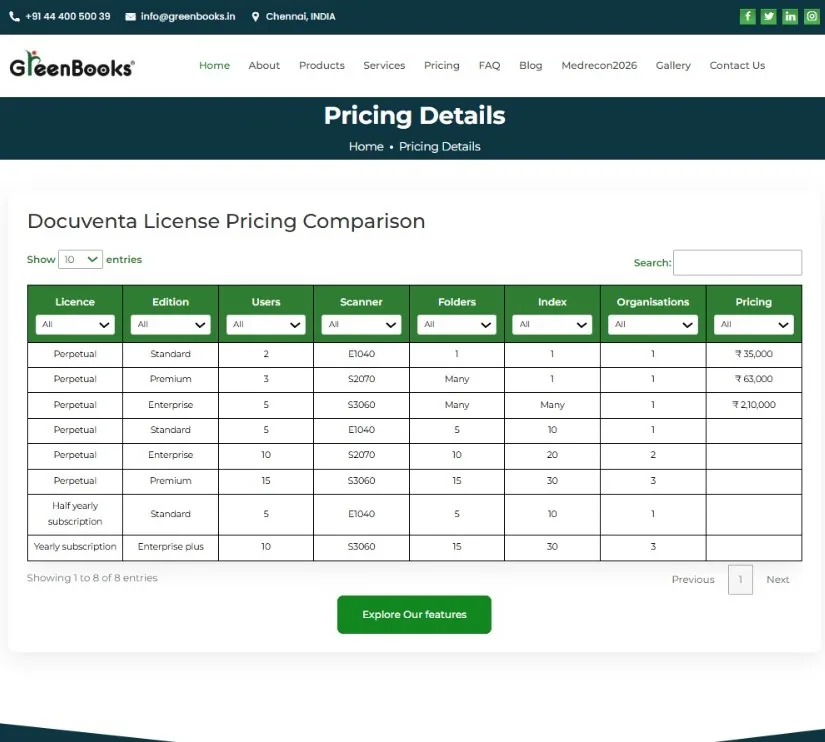
These tools handle one document at a time. When the job is thousands of files, Greenbooks handles document digitization as a managed service, including bulk scanning, OCR and metadata capture, with the output loaded into DocuVenta DMS. Talk to us about volume work.